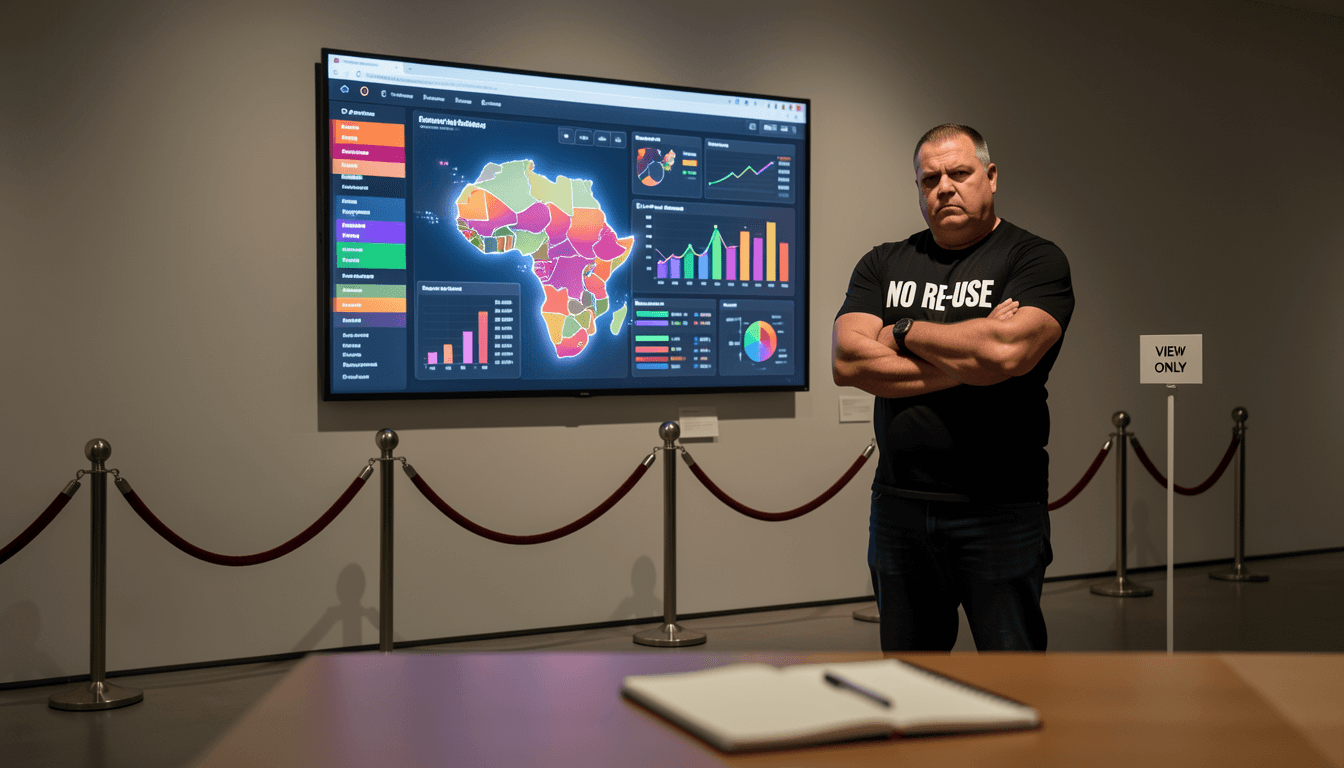
The Data Is Public. The Value Is Locked.

There's a beautiful public dashboard tracking one of the most important development efforts on Earth. Anyone can look at it. Almost nobody can actually use it.
The dashboard belongs to the World Bank's Mission 300 — a commitment to connect 300 million people across Sub-Saharan Africa to electricity by 2030.¹ The progress portal is genuinely impressive: 88 projects across 38 countries, more than 40 million people already connected, over $16 billion in financing commitments, and milestones updated as the work moves. It's polished, real-time, and free for anyone to view.
A client of mine needed that data. Not to look at — to use. To track progress quarter over quarter, fold it into their own reporting, and answer their own questions on their own schedule. And that's where the polished public dashboard turned out to be a locked door.
I'm a Martech architect and executive advisor. I help operators turn technical reality into decisions they can act on. This project taught — or re-taught — three things I think most leaders get wrong about the data and tools they depend on from the outside world. The third one is the one that changes the math.
1. Built to Be Seen, Not Used
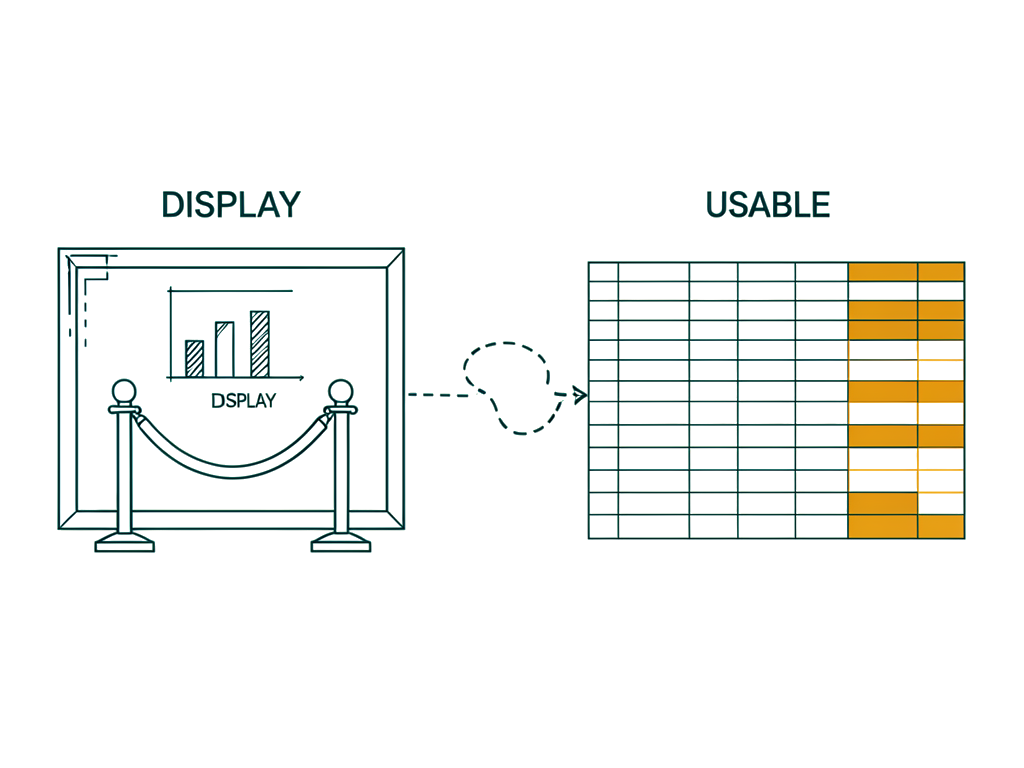
The Mission 300 portal is excellent at exactly one job: letting a minister, a journalist, or a donor glance at it and understand where things stand. That's what it was built for. Every design choice serves the viewer.
But "easy to look at" and "easy to work with" are different engineering goals, and a thing built well for one is usually built badly for the other. The numbers on that dashboard live inside a presentation layer — formatted, rendered, arranged for the eye. Getting them into a structured form you can analyze, compare, and build on is real work that someone has to do. The data was public. It was not, in any practical sense, available.
This is the trap with public and free data generally. "Public" tells you that you're allowed to have it. It tells you nothing about whether it's organized for what you need. Government datasets, open portals, partner reports, regulatory filings — most of it is structured for the publisher's purpose, which is almost never your purpose. The gap between "I can see it" and "I can use it" is where the actual cost hides.
“"Public" tells you that you're allowed to have it. It tells you nothing about whether it's organized for what you need.”
Executive Insight #1: Free and public does not mean usable. Data is almost always organized for the goals of whoever published it — usually display, compliance, or their own reporting — not for your analysis. Before you treat a public source as a solved problem, ask what it would actually take to get it into a shape your business can work with. The "available" version and the "usable" version are rarely the same thing.
2. You Can't Make Your Partners Tidy
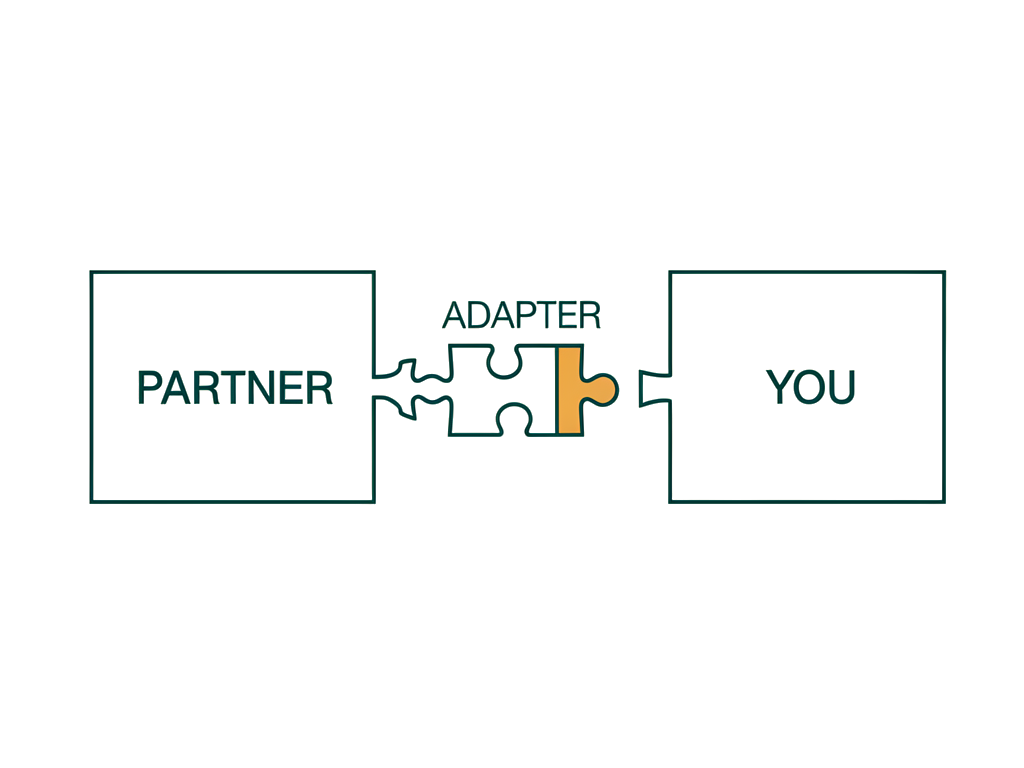
Here's the instinct I see leaders reach for next: make them fix it. Ask the World Bank to publish a clean data export. Ask the partner to change their format. Ask the vendor to add the field you need.
Good luck. You don't control how partners, public institutions, vendors, or your broader community structure what they produce. They build for their own goals and their own audiences — and they should. A massive public initiative is not going to re-engineer its portal because one organization downstream wants tidier data. Demanding it is usually futile, and it spends goodwill you'll want later.
The move that actually works is the opposite. Stop trying to change what they produce, and instead get good at working with what they give you. Meet them where they are. Build the adapter on your side. In this case, that meant pulling the data straight from the model behind the dashboard and reshaping it into something the client could use — quietly, on our end, without asking anyone to change a thing. The source stayed exactly as it was. We just stopped needing it to be different.
Executive Insight #2: You can't control what your partners and your community do — and you shouldn't try to. But you can almost always find a way to work well with them and extract real value from what they produce, even when it's an imperfect fit for what you're trying to do. The value isn't in forcing the fit. It's in building the small bridge that makes their output work for you.
Ready to build the bridge instead of fighting the mismatch?
Let's talk through what a lightweight adapter between your systems and your partners' data would look like.
3. The Bridge Used to Be Expensive. It Isn't Anymore.
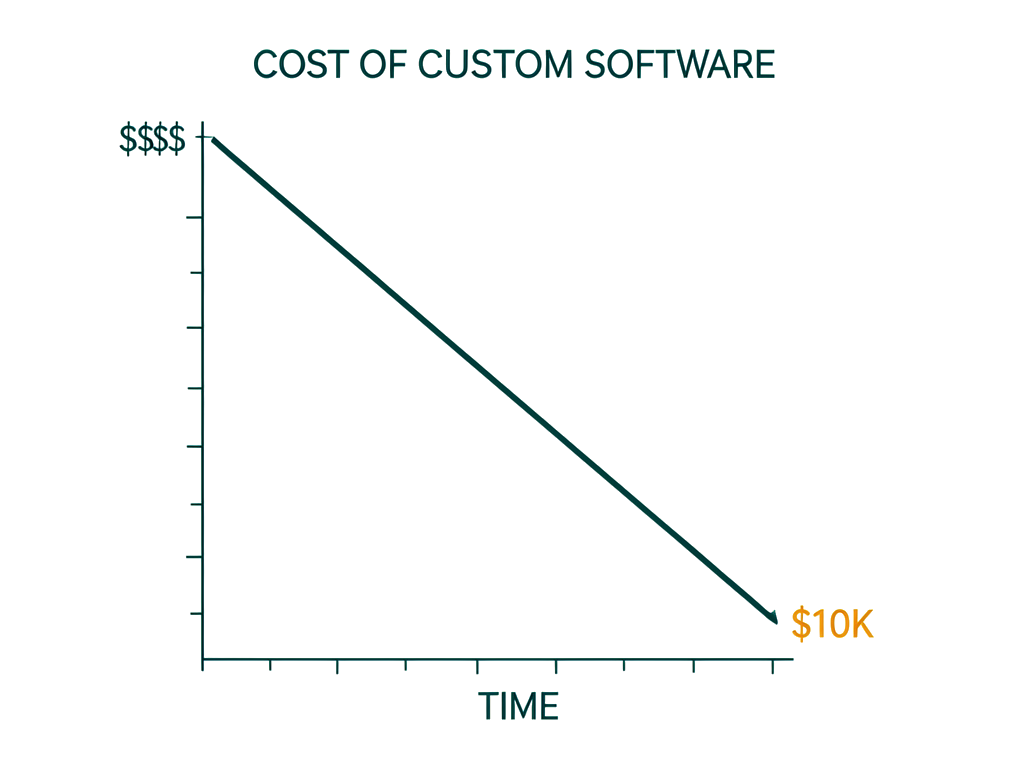
So why doesn't everyone just build that bridge? Because for most of the last few decades, "build a custom tool to bridge the gap" meant a serious software project: a team, a six-figure budget, months of calendar time, and something to maintain forever after. Against that cost, living with the misfit looked rational. So businesses copy-paste into a spreadsheet every quarter. They settle for the stale report. They do without the analysis entirely. The workaround feels free because its cost is hidden in people's time.
That math has quietly flipped, and most businesses haven't noticed.
The system we built for this client isn't a one-off script. It pulls the data automatically every quarter, enriches it from a second public source, computes what changed since last time, and delivers a clean workbook — running in the cloud, monitored, with documentation so the client can own it after we hand it off. A real, durable, fitted tool.
It cost about $10,000.
That number is the whole point. The thing businesses have been assuming is a major capital project — custom software built for exactly their need — has dropped into the range of an ordinary operating expense. The tools and techniques that make this possible have gotten dramatically cheaper and faster in just the last couple of years. The custom option you priced out three years ago and shelved as "too expensive" deserves a fresh quote.
Executive Insight #3: The cost of custom, need-specific software has collapsed. Solutions that used to require a six-figure project and a standing team can now be built for a few thousand dollars. Stop defaulting to "we'll just live with it." Re-price the custom option honestly against the workaround you're tolerating — including the hours your people quietly burn on it — and the fitted tool is often the cheaper choice, not the luxury one.
What This Adds Up To
Put the three together and a pattern appears that goes well beyond one electrification dashboard.
The data and tools your business depends on from the outside — partner feeds, public datasets, vendor exports, community and open-source resources — were built for someone else's purpose. They will never fit your needs perfectly, and you can't make their authors change them. For a long time, the only options were to live with the misfit or to spend a fortune closing the gap. Most businesses chose to live with it, and called it pragmatism.
That trade-off has changed. The bridge between "what the world gives you" and "what you actually need" is now cheap enough that tolerating the misfit is no longer the obvious call. Custom, fitted solutions are attainable for far more businesses, and far smaller budgets, than most leaders assume.
Where Are You?
Look at the data and tools you rely on from outside your walls. The partner export someone reformats by hand every month. The public dataset you'd love to use but "can't really get at." The vendor report that's almost-but-not-quite what you need.
You've probably been living with each of those because the custom fix felt out of reach. Re-check that assumption. What used to be a six-figure project may now be a $10K line item — and the thing you've been settling for might finally be worth fixing.
Want to figure out which of your misfit tools is worth bridging? Let's chat.
Got a misfit tool you have been living with?
Let us figure out if the bridge is cheaper than you think.
Quick Reference: Unlocking Value from Public Data
Insight | What It Means | What to Do |
|---|---|---|
Built to be seen, not used | Public/free data is organized for the publisher's purpose, not yours | Assume a gap between "available" and "usable"; budget for the work to close it |
You can't make your partners tidy | You don't control how others structure what they produce — and can't force it | Build the adapter on your side; work well with their output instead of changing it |
The bridge got cheap | Custom, fitted software has dropped from six figures to a few thousand | Re-price the custom option against the workaround you tolerate; it's often cheaper |
Nate is the founder of PathPractical — executive advisory for technology roadmapping, planning, and architecture. He helps business leaders translate technical complexity into decisions they can act on.
Notes & References
World Bank Group & African Development Bank — Mission 300, the initiative to connect 300 million people in Sub-Saharan Africa to electricity by 2030. Project and country figures referenced here (88 projects, 38 countries, 40M+ people connected, $16B+ in commitments) are drawn from the public Mission 300 progress portal as of the Q3 2026 snapshot and shift each quarter. (Confirm the exact program URL before publishing.)
The client engagement described here has been anonymized. Mission 300 and the World Bank are referenced as public initiatives; the organization that commissioned the work, and any of its internal details, are not named. The ~$10K figure is an approximate, rounded representation of the engagement.

Chat with the author
If you'd like to make a connection and perhaps collaborate on something:I'd love to talk with you!No matter if you want to build your professional network,or think there might be a great opportunity to to work together or partner.